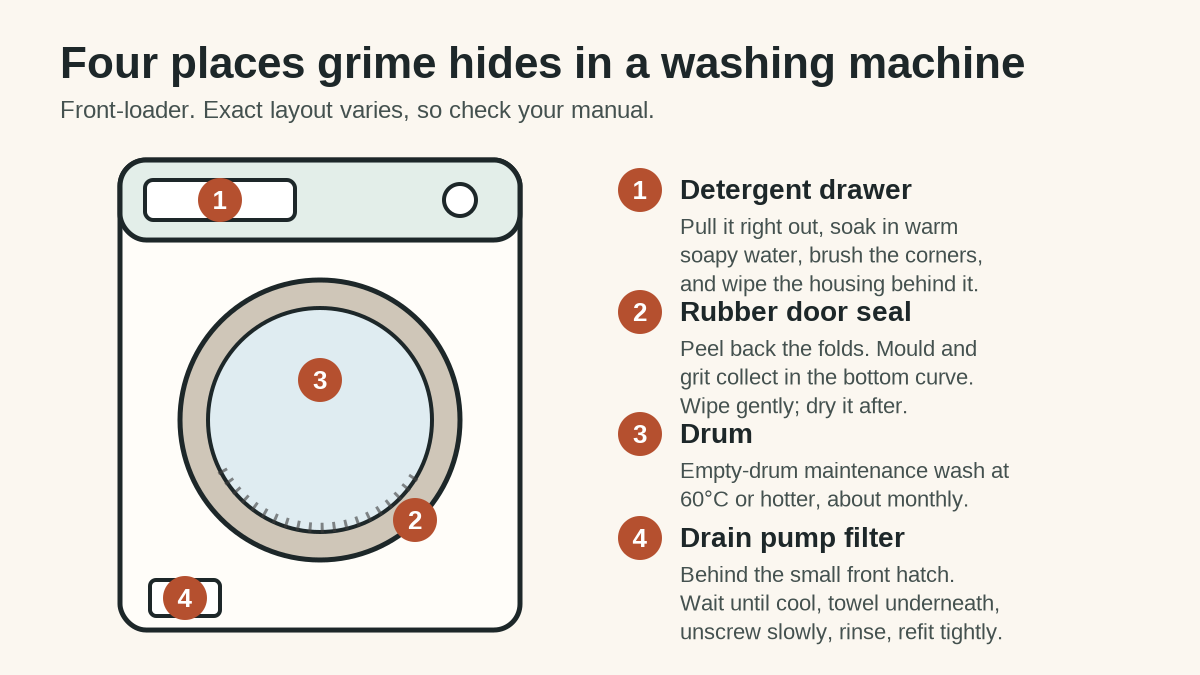
Appliances
How to clean a washing machine (and stop it smelling)
A step-by-step UK guide to cleaning a front-loading washing machine: the detergent drawer, rubber door seal, drum and drain pump filter, plus how to stop the smell coming back.
Damp & mould
How to remove small patches of black mould from walls, ceilings and window reveals safely, what causes it in British homes, and when to stop and report it to your landlord instead.

Black mould on a bedroom wall, round a window or in the corner of a bathroom ceiling is one of the most common problems in British homes, especially in winter. Small patches caused by condensation can usually be cleaned off safely in half an hour. But mould is a symptom, not the problem. If you don’t deal with the moisture behind it, it’ll be back within weeks.
This guide covers how to tell whether a patch is something you should tackle yourself, how to clean it safely, and what to do if you rent.
This isn’t medical advice. Damp and mould can affect health, particularly for babies and children, older people, and anyone with asthma, other breathing problems, skin conditions or a weakened immune system. NHS inform advises people in these groups not to remove mould themselves. If you’re worried about symptoms, speak to a GP or pharmacist, or call NHS 111.
The diagram at the top of this page is the short version. In more detail:
| Probably fine to clean yourself | Get the cause fixed first, and get help |
|---|---|
| A few spots or a small patch, roughly hand-sized to tea-tray-sized | Large areas, or patches across several rooms |
| On a hard surface: paint, tiles, sealant, window frames | In plaster you can dent, behind wallpaper, or on carpet and furniture |
| Clearly linked to condensation: cold corners, behind furniture, round windows | After a leak, flood or burst pipe, or with a tide mark low on the wall |
| Goes away when cleaned and the room is ventilated | Comes back quickly, smells musty, or the wall feels wet |
| Healthy adults doing the cleaning | Anyone in the home at higher risk |
Most mould in UK homes is caused by condensation: warm, moist air from cooking, showering, drying washing and breathing meets a cold surface and turns back into water. You’ll often see it on north-facing walls, in corners of outside walls, behind wardrobes pushed against outside walls, and round windows.
Other causes need a different fix. Penetrating damp comes from leaks, damaged gutters or failed pointing. Rising damp comes up from the ground. A patch that’s darker after rain, or a band of damp along the bottom of a wall, points to one of these.
| Option | Best for | Pros | Cons |
|---|---|---|---|
| Warm water and washing-up liquid | Light spotting on paint, tiles and window frames | Gentle, cheap, no fumes | Won’t lift deep staining |
| Mould and mildew spray (often bleach-based) | Sealant, grout, tiles, gloss paint | Removes staining quickly | Strong fumes; can bleach fabrics and some paints. Never mix with other products. |
| Neat household bleach | Not recommended on walls | None that a proper spray doesn’t do better | Harsh fumes, hard to control, doesn’t soak into plaster |
Whatever you choose, test it on a small, hidden area first, particularly on painted walls and wallpaper, which can mark or bleach.
Open the window and close the internal door so spores and fumes don’t drift into the rest of the house. Move furniture away from the wall. Cover the floor, and take curtains or soft items out of the room if you can. Keep children and pets out.
Gloves, goggles and a mask go on before you touch anything. Mould releases spores when it’s disturbed, which is the bit you don’t want to breathe in.
If you’re using a mould spray: follow the label exactly. Most say to spray, leave for a set time and then wipe or rinse. Many contain bleach, so ventilation matters.
If you’re using soapy water: dampen a cloth in warm water and washing-up liquid, wring it out well, and wipe the mould gently. Don’t saturate the wall.
Either way, don’t scrub at dry mould with a brush. It flicks spores into the air. Turn the cloth to a clean side frequently, and switch to a fresh cloth when it’s dirty.
Never mix cleaning products. Many mould sprays contain bleach (sodium hypochlorite). Mixed with acidic cleaners such as limescale removers or vinegar, or with ammonia-based products, bleach can give off toxic gases. The London Fire Brigade warns about exactly this. Use one product, rinse, and ventilate.
Once the mould has gone, wipe the area with a dry cloth. Leaving a damp wall is an invitation for it to come straight back.
Put the cloths, and the mask if it’s disposable, into a plastic bag, tie it and put it in the bin. Wash the clothes you were wearing and take a shower. Wash any soft furnishings that were near the mould, or have them dry-cleaned.
Mould on bath or shower sealant often grows into the silicone, leaving dark stains that won’t come out. If a mould spray doesn’t shift it, the honest fix is to cut out the old sealant and reseal. It’s a cheap DIY job.
Cleaning buys you a few weeks. Controlling moisture is what keeps it away.
A cheap test. A digital hygrometer costs a few pounds and shows indoor humidity. Readings that stay high, much above 60%, especially in the morning, suggest the room needs more ventilation or a dehumidifier.
Damp and mould are not just a lifestyle issue, and you shouldn’t be left to keep cleaning a problem caused by the building. Landlords are generally responsible for repairs to the structure and exterior, heating, and the things that affect ventilation.
The GOV.UK pages for private renters and council tenants explain your rights and what to do if repairs aren’t carried out, including contacting your council. In England, Awaab’s Law, named after two-year-old Awaab Ishak, now requires social landlords to investigate and fix dangerous damp and mould within set timescales. The government’s damp and mould guidance for landlords is clear that tenants shouldn’t be blamed for “lifestyle choices”, and that landlords should tackle the underlying causes.
Get a builder, roofer or damp specialist involved if there’s a leak, a damp patch that never dries, a tide mark low on the wall, rotten skirting or timber, or mould covering a large area. Be wary of anyone who sells an expensive damp-proof course without first checking for simpler causes like leaking gutters, high outside ground levels or blocked air bricks.
For a small patch caused by condensation, on a hard surface, most healthy adults can clean it with the right protection. NHS inform advises people with breathing problems such as asthma, skin conditions or weakened immune systems not to remove mould themselves, and to keep babies and children out of the way.
Bleach can remove the dark staining from hard surfaces, but it doesn't soak into porous materials like plaster, and it releases strong fumes. A purpose-made mould and mildew cleaner, used as directed, is easier to control. Never mix bleach with other cleaners.
No. Paint over mould usually fails, and the mould grows back through it. Clean it, let the wall dry completely, and deal with the cause. You can then use a mould-resistant paint if you want to.
Day-to-day habits do affect condensation, but persistent damp and mould can also be caused by poor ventilation, insulation, heating or building defects. Landlords are responsible for repairs. Report it in writing and see the GOV.UK guidance for renters.
A dehumidifier can help by pulling moisture out of the air, especially in rooms where you dry washing. It works best alongside ventilation and steady heating, and it can't fix a leak or rising damp.
This guide is general advice for UK homes. Your appliance manual and product labels come first: if they say something different, follow them. Spotted something wrong or out of date? Tell us and we’ll check and correct it.
A step-by-step UK guide to cleaning a front-loading washing machine: the detergent drawer, rubber door seal, drum and drain pump filter, plus how to stop the smell coming back.
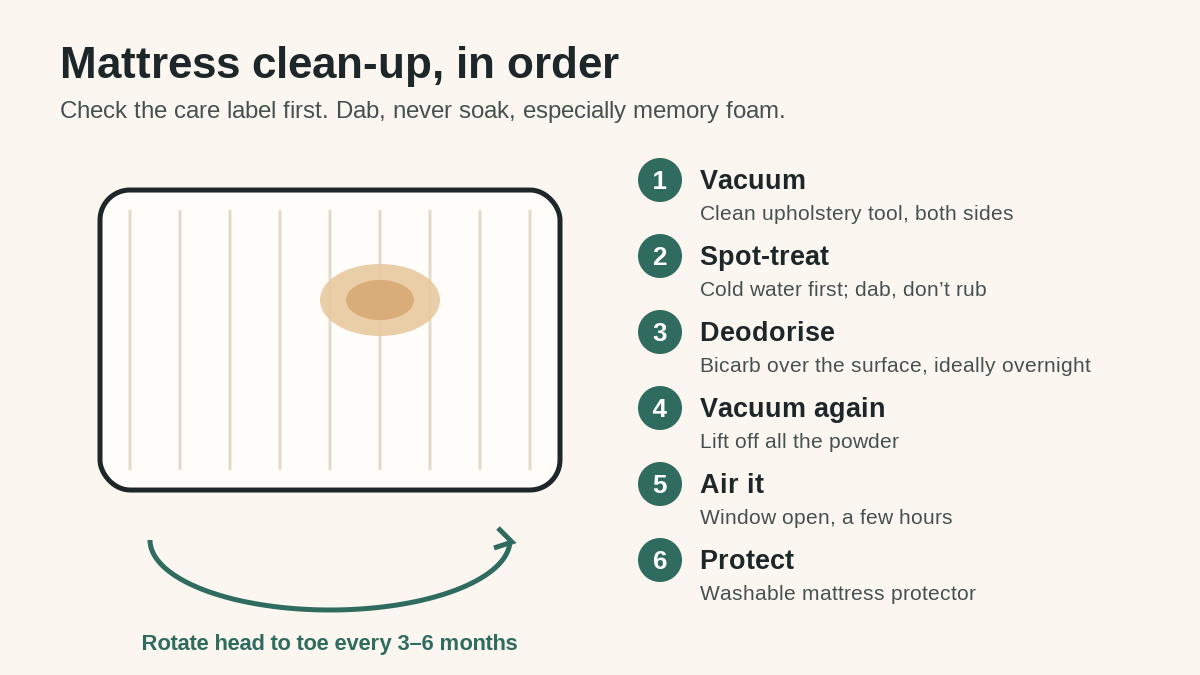
How to clean a mattress without soaking it: a simple six-monthly routine, how to lift blood, urine, sweat and tea stains, freshening with bicarbonate of soda, and memory foam dos and don’ts.
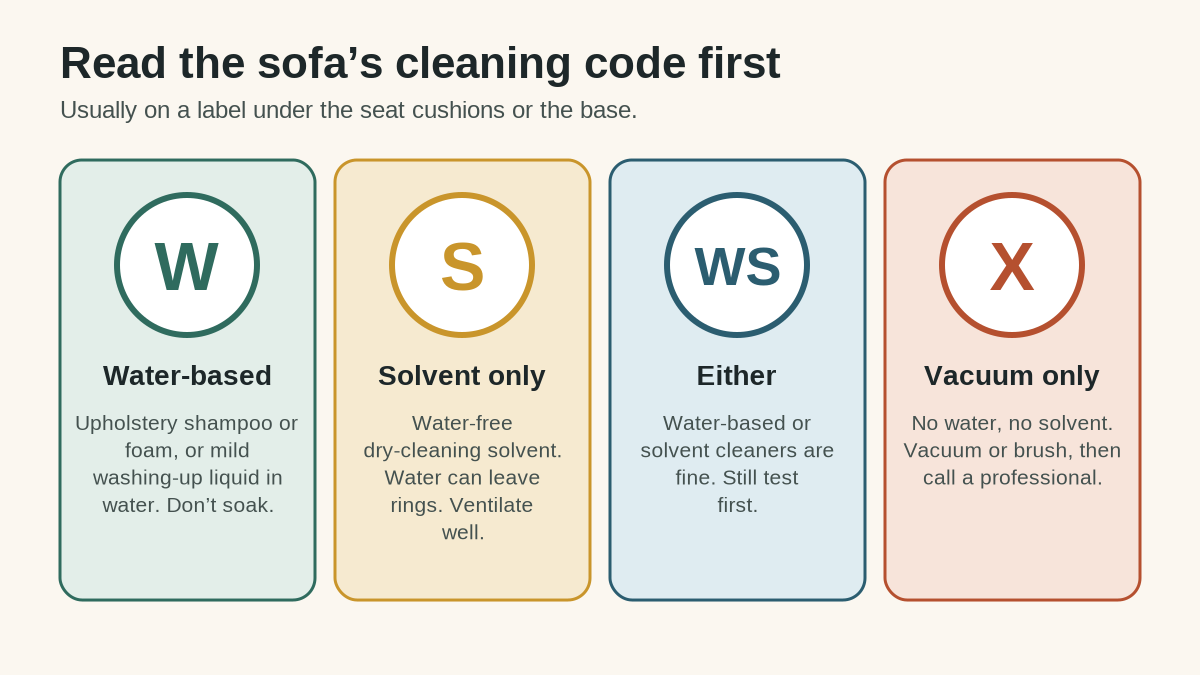
How to clean a fabric, leather or velvet sofa safely: reading the W, S, WS and X cleaning codes, lifting common stains, washing removable covers and freshening without soaking.