A sofa takes more daily use than almost anything else in the house. People eat on it, sleep on it, sit on it in work clothes, and pets curl up on it. Yet most sofas get little more than a quick plump of the cushions. A regular vacuum and quick action on spills will keep yours looking good for years. But before you put any cleaner on it, you need to know one thing: its cleaning code.
Step one: find the cleaning code
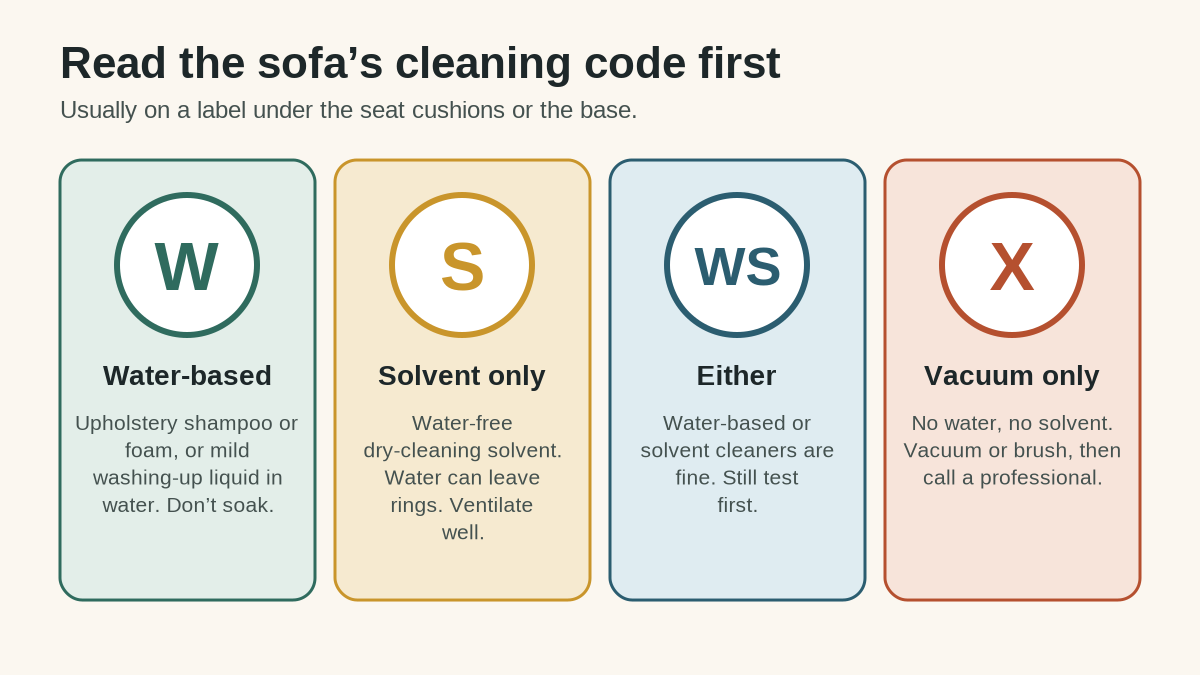
Most sofas sold in the UK carry a label, usually under the seat cushions or on the base, with care instructions. Many include a one- or two-letter upholstery cleaning code. You’ll often find it near the permanent fire safety label that upholstered furniture sold in the UK must carry under the Furniture and Furnishings (Fire) (Safety) Regulations 1988. Don’t remove that label. It shows the sofa meets fire safety rules.
| Code |
Means |
Use |
Avoid |
| W |
Water-based cleaners |
Upholstery shampoo or foam, or a little washing-up liquid in water |
Soaking; solvents |
| S |
Solvent only |
Water-free dry-cleaning solvent, used sparingly with ventilation |
Water, which can leave rings or shrink the fabric |
| WS (or SW) |
Either |
Water-based or solvent cleaners |
Over-wetting |
| X |
Vacuum only |
Vacuuming and gentle brushing |
Any liquid. Call a professional for stains. |
If there’s no code, check the retailer’s website or contact them. If you still can’t find out, treat it as delicate: vacuum only and test any cleaning very carefully somewhere hidden.
What you’ll need
- A vacuum cleaner with a clean upholstery tool and crevice tool
- White microfibre cloths (coloured cloths can transfer dye)
- The right cleaner for your code (see the table)
- Bicarbonate of soda for freshening (fabric sofas only)
- A soft brush
How to clean a fabric sofa
1. Vacuum everything
Take off all the cushions. Use the crevice tool down the sides and back, where crumbs, coins and pet hair collect. Then use the upholstery tool over the frame, arms and every side of every cushion. Vacuum regularly, weekly if you have pets, and you’ll rarely need a deep clean.
2. Freshen with bicarb (optional)
For a stale-smelling fabric sofa, sprinkle a light layer of bicarbonate of soda over the seats, leave it for 20 minutes or longer, then vacuum it off thoroughly. Don’t use bicarb on leather, silk or delicate fabrics. Which? warns it can be too abrasive for some surfaces.
3. Test your cleaner
Choose a hidden spot, like the back near the floor or the underside of a cushion, and try the cleaner there. Let it dry fully and check for colour loss, rings or changes in texture.
4. Spot-clean stains
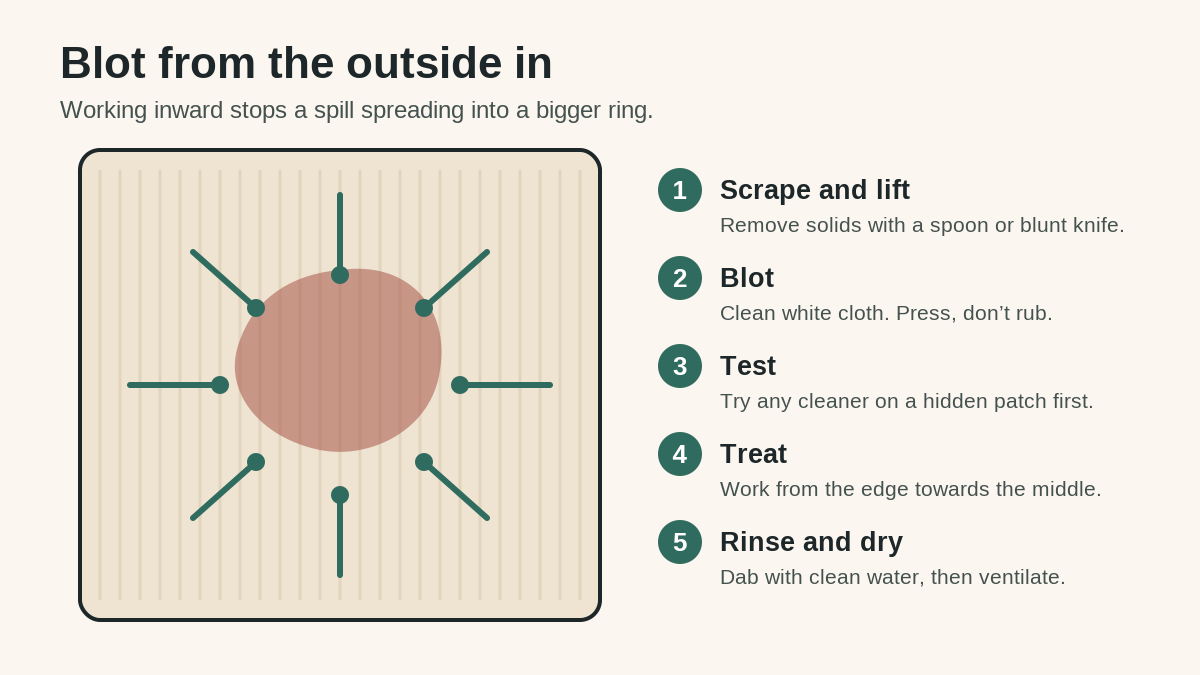
- Blot up as much as you can with a dry cloth.
- Apply the cleaner to a cloth, not directly onto the sofa.
- Dab from the outside of the stain towards the middle.
- Dab with a cloth dampened in clean water to remove residue. For S codes, use solvent only.
- Blot dry with a clean, dry cloth.
5. Let it dry and brush the pile
Open a window and let the fabric air-dry. Don’t sit on it while it’s damp. Once dry, brush gently in one direction to lift the pile and blend any cleaned patches.
Using solvents. Dry-cleaning solvents for S-coded fabric are flammable, and their fumes shouldn’t be breathed in. Use small amounts, keep the room well ventilated, keep them away from flames and heaters, and follow the label. The HSE’s COSHH guidance is written for workplaces, but the principles are sensible at home too: read the hazard information and limit exposure. Never mix cleaning products.
Common sofa stains
| Stain |
W / WS fabric |
S fabric |
| Food grease |
Washing-up liquid solution, dabbed, then rinse |
Solvent on a cloth |
| Tea and coffee |
Blot, cool water, then upholstery shampoo |
Blot, then solvent |
| Ink |
Get professional advice. Ink spreads easily. |
Professional |
| Pet accidents |
Blot, then an enzyme cleaner suitable for upholstery |
Blot and call a professional |
| Water ring |
Dampen the whole panel evenly, seam to seam, and let it dry |
Solvent, or professional |
Washable covers
Some sofas have removable covers, but removable doesn’t always mean washable. Some zips are there for fitting the cover in the factory. Check the care label symbols. The GINETEX care symbols guide explains what each one means.
If they’re washable:
- Wash all the covers in a set together, so they fade evenly.
- Use a cool, gentle cycle and a mild detergent.
- Don’t tumble dry unless the label allows it.
- Refit covers while they’re still very slightly damp. They stretch back into shape more easily and are less likely to shrink.
Leather sofas
Leather needs different care: gentle cleaning, then conditioning to stop it drying and cracking.
- Vacuum with a soft brush attachment.
- Wipe with a cloth that’s barely damp with clean water.
- Use a cleaner made for leather, following the instructions.
- Apply a leather conditioner every few months, or as the manufacturer suggests.
- Keep leather out of direct sun and away from radiators.
Avoid washing-up liquid, bleach, baby wipes, all-purpose sprays and furniture polish. They can strip the finish. Unfinished (aniline) leather is very absorbent and marks easily, so ask the manufacturer before using any product.
Velvet sofas
Velvet can be cotton, polyester or a blend, so the code matters even more. Vacuum with a soft brush in the direction of the pile. For spills, blot right away. Don’t rub, which can crush the pile. A handheld fabric steamer can help lift crushed pile on some velvets, but only if the label allows it and you test it first.
Pet hair
Pet hair weaves itself into fabric, especially textured weaves and velvet. Ordinary vacuuming often leaves a lot behind.
- Rubber gloves: put on a pair of slightly damp rubber gloves and sweep your hand across the fabric. The hair rolls up into clumps you can pick off.
- Rubber pet hair brushes and squeegees work the same way and are cheap.
- Lint rollers are good for a quick tidy before guests arrive.
- A motorised pet tool on a vacuum is the most effective option for regular cleaning if you have one.
A washable throw over the pet’s favourite spot saves a lot of work. It’s much easier to wash a throw than the sofa.
A simple sofa care routine
| How often |
Job |
| Daily |
Plump and turn cushions so they wear evenly |
| Weekly |
Vacuum, including under cushions and down the sides |
| Straight away |
Blot spills before they soak in |
| Every few months |
Freshen fabric with bicarb, condition leather |
| Every year or two |
Deep clean by a professional, or by you if the code allows |
Keeping sofas out of strong direct sunlight helps stop fading, and keeping them a little way from radiators stops leather drying out and fabric getting brittle.
When to call in a professional
Call a professional upholstery cleaner for X-coded fabric, silk, antique or expensive pieces, large stains, or anything you’ve already tried and made worse. They can identify the fabric and choose a method, and many will treat the fabric with a stain guard afterwards.
Frequently asked questions
Where do I find the cleaning code on my sofa?
Usually on a label under the seat cushions, on the base or on the back. It may sit alongside the fire safety label that UK furniture must carry. If there’s no code, contact the retailer or treat the sofa as delicate.
Can I use a carpet cleaner or steam cleaner on my sofa?
Only on fabrics coded W or WS, and only if the manufacturer allows it. Use an upholstery tool, use as little water as possible, and test first. Never use water or steam on S or X coded fabrics, or on velvet unless the label allows it.
How do I get a water ring out of a sofa?
Water rings form when fabric dries unevenly. On W-coded fabric, lightly dampen the whole panel evenly, from seam to seam, with a barely damp cloth and let it dry. On S-coded fabric, use a solvent cleaner, or ask a professional.
Can I put sofa cushion covers in the washing machine?
Only if the care label says they’re washable. Some covers are designed to be removed for zips and fitting, not for washing. Wash on a cool, gentle cycle, don’t tumble dry unless the label allows it, and refit while slightly damp.
How do I clean a leather sofa?
Vacuum, wipe with a cloth dampened in clean water, then use a cleaner made for leather, followed by a conditioner. Avoid washing-up liquid, bleach, baby wipes and furniture polish, which can dry out or damage the finish.
This guide is general advice for UK homes. Your appliance manual and product labels come first: if they say something different, follow them. Spotted something wrong or out of date? Tell us and we’ll check and correct it.