Soft furnishings
How to clean a sofa: fabric, leather and velvet
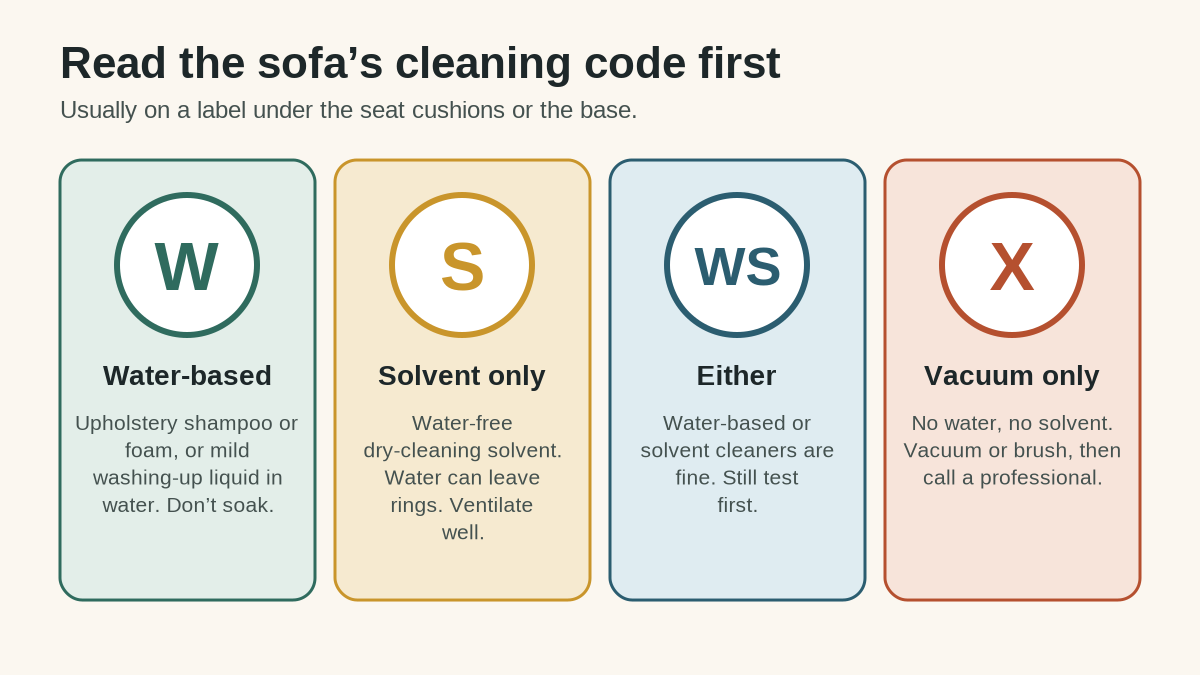
How to clean a fabric, leather or velvet sofa safely: reading the W, S, WS and X cleaning codes, lifting common stains, washing removable covers and freshening without soaking.
Soft furnishings
How to deep clean a carpet by hand or with a hired machine, how to remove common stains like red wine, tea, mud and pet accidents, and how to get rid of smells, with UK products and costs.
Carpet is warm, quiet and cosy, which is why so much of the UK still has it in bedrooms, stairs and living rooms. It’s also a magnet for grit, hair, spilled tea and whatever the dog brings in from the garden. Most of the time, keeping a carpet looking good comes down to three things: vacuuming often, dealing with spills straight away, and a deeper clean once or twice a year.
This guide covers all three, by hand or with a hired machine.
The fibre affects what you can safely use. If you don’t know what yours is made of, check any offcuts, the original receipt or the label on the back of a spare piece.
| Fibre | Common in | Care notes |
|---|---|---|
| Wool and wool-rich blends (often 80/20 wool/nylon) | Living rooms, stairs, bedrooms | Use products marked as suitable for wool. Avoid harsh alkaline cleaners, bleach and very hot water. |
| Polypropylene | Budget carpets, rentals, kitchens | Tough and stain-resistant. Tolerates most cleaners. Can flatten with heat. |
| Nylon | Hard-wearing ranges | Durable. Some dyes can be affected by strong cleaners. |
| Natural (sisal, seagrass, jute) | Hallways, rugs | Very little water. Many need dry cleaning methods only. |
The Woolmark Company’s care advice and the Carpet Foundation both recommend acting quickly on spills and using products designed for the fibre.
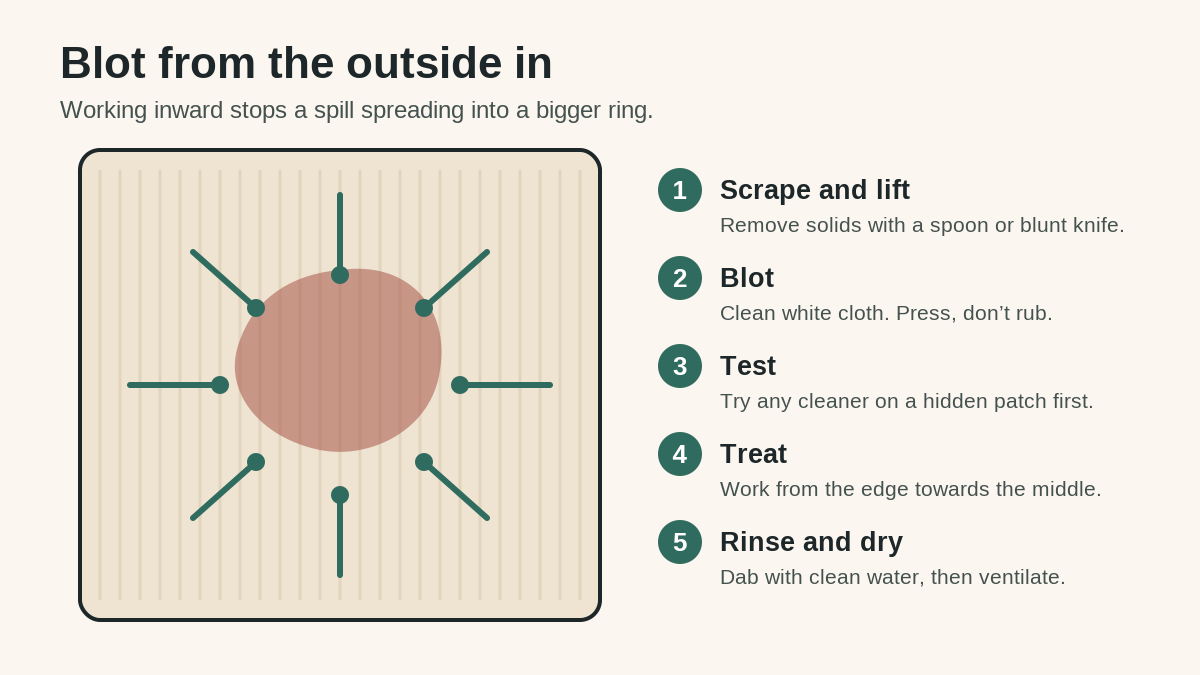
Speed matters more than the product. Most spills come out with water and patience if you get to them quickly.
Which? suggests the same order: start gentle with a little detergent and water, and only move to a stronger carpet stain remover if that doesn’t work. Its stain remover tests found big differences between brands, so it’s worth checking the results before you buy.
| Stain | What to try |
|---|---|
| Red wine | Blot immediately. Dab with cold water, blot, then detergent solution. Don’t add salt, which can set it into wool. A carpet stain remover may be needed for old marks. |
| Tea and coffee | Blot, then detergent solution, then rinse. Milky drinks need a detergent to shift the fat. |
| Mud | Let it dry completely, then break it up and vacuum. Treat any mark left with detergent solution. |
| Grease and oil | Blot, then dab with washing-up liquid solution, which is designed to cut grease. Repeat as needed. |
| Candle wax | Freeze with an ice pack in a bag, chip off, then put brown paper over it and warm briefly with an iron on a low setting to lift the rest. Not on synthetic fibres that could melt. |
| Chewing gum | Harden with ice in a bag, then pick off. Treat any residue with detergent solution. |
| Pet urine and vomit | Remove solids, blot, rinse with a little water, then use an enzyme cleaner made for pet stains. |
| Blood | Cold water only, blotting. Warm water sets it. |
Product safety. Read the label on every carpet product and keep the room ventilated. Never mix cleaning products, and never combine bleach with vinegar, limescale removers or ammonia-based cleaners. The London Fire Brigade warns these mixtures can release toxic gases. Keep children and pets off treated areas until dry.
Good for a single room once or twice a year, or a rental move-out.
For a proper deep clean, a carpet cleaning machine (a “wet extraction” or “steam” cleaner) sprays a cleaning solution into the pile and sucks the dirty water back out. You can hire them from many supermarkets, DIY shops and dry cleaners, or for home delivery from Rug Doctor, which also offers an upholstery hand tool for an extra £4.99.
Tips for a good result:
Most carpet smells come from something organic: pet accidents, spilled milk, damp, or general body oils and dust built up over time.
Air fresheners and carpet powders hide smells for a while, but they don’t remove the cause.
Stairs collect dirt at the front edge, where feet land. Use the crevice tool or a stiff hand brush along the back of each tread, then the upholstery tool on the nose. Hand-held carpet cleaners are much easier than full-size machines on stairs.
Use a professional cleaner for wool or natural fibre carpets with large stains, expensive or antique rugs, flood damage, or any carpet with a “dry clean only” instruction. Ask about their method, insurance and whether they’re a member of a recognised trade association.
Yes. Vacuum thoroughly, treat stains with a mild detergent solution, freshen with bicarbonate of soda, vacuum again and let it dry. It won’t remove deep-down dirt as well as a machine, but it’s fine for regular upkeep.
Each can help on its own: bicarb absorbs odours, and diluted vinegar can freshen. But Which? points out that one is acid and the other alkaline, so they cancel each other out if used together. Never use vinegar alongside bleach-based products.
Prices vary by store and hire length. Rug Doctor machines can be hired from supermarkets, DIY shops or for home delivery. The upholstery hand tool is an extra £4.99, and you also need to buy cleaning solution. Check current prices before you go.
Usually a few hours to a day, depending on how wet it got, the carpet type and the weather. Open windows, run the heating gently and keep air moving. Don’t put furniture back until it’s dry.
Blot up as much as possible, rinse with a little clean water and blot again, then use an enzyme cleaner made for pet stains. Enzyme cleaners break down the organic matter that causes the smell. Avoid ammonia-based cleaners, which can encourage pets to go in the same spot.
This guide is general advice for UK homes. Your appliance manual and product labels come first: if they say something different, follow them. Spotted something wrong or out of date? Tell us and we’ll check and correct it.
How to clean a fabric, leather or velvet sofa safely: reading the W, S, WS and X cleaning codes, lifting common stains, washing removable covers and freshening without soaking.
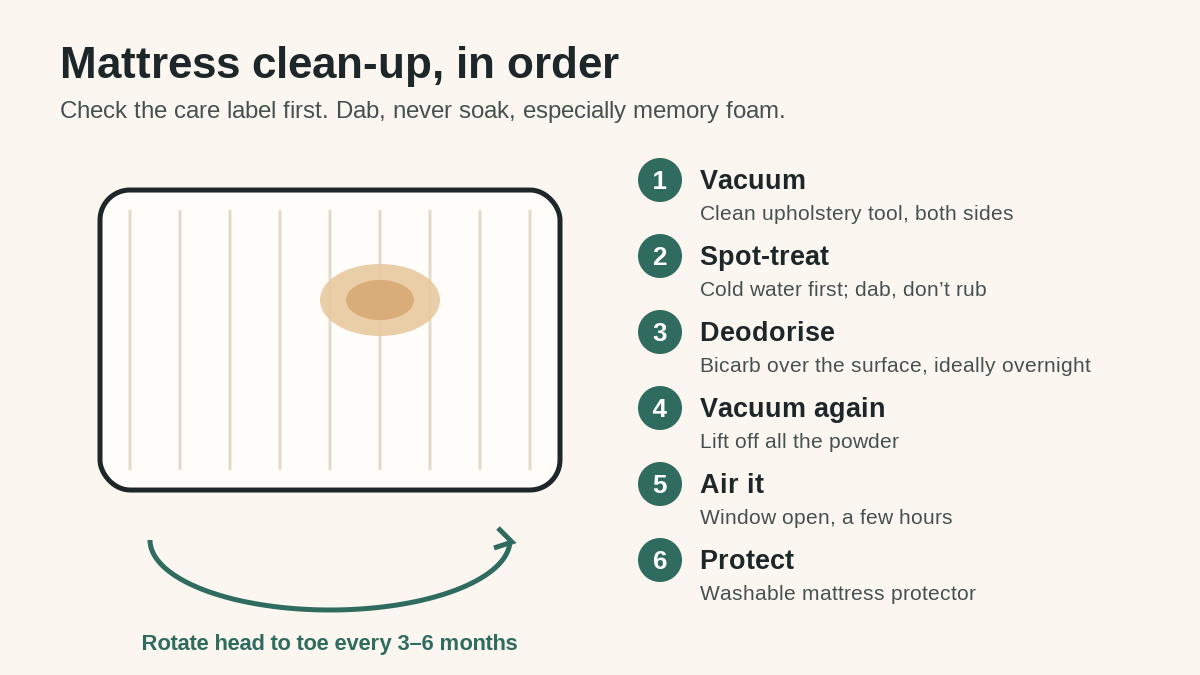
How to clean a mattress without soaking it: a simple six-monthly routine, how to lift blood, urine, sweat and tea stains, freshening with bicarbonate of soda, and memory foam dos and don’ts.
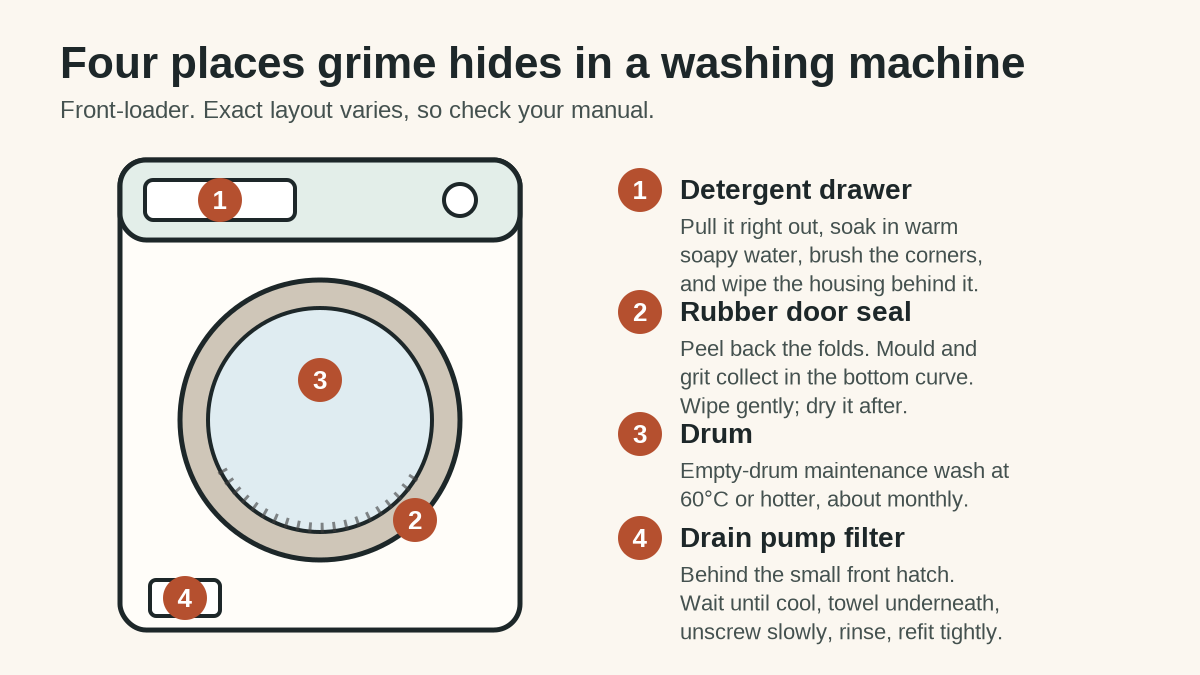
A step-by-step UK guide to cleaning a front-loading washing machine: the detergent drawer, rubber door seal, drum and drain pump filter, plus how to stop the smell coming back.