Appliances
Oven to air fryer conversion: times and temperatures
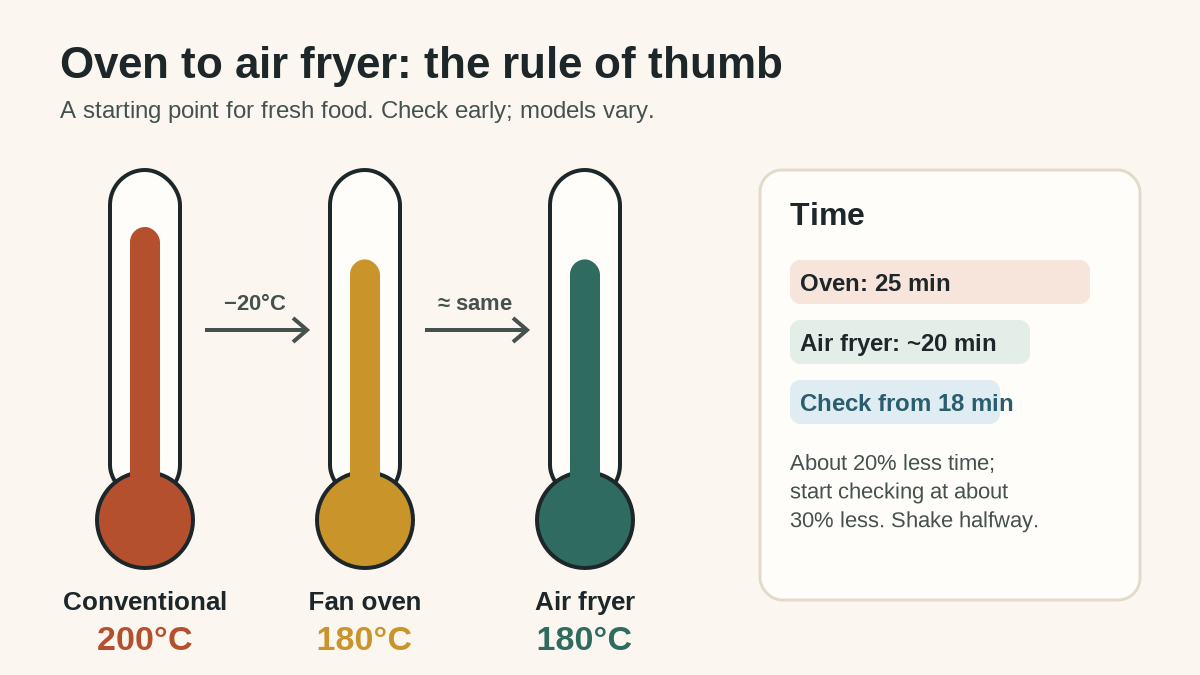
How to convert oven recipes to an air fryer in °C, including fan ovens and gas marks: the simple rule, a conversion chart, worked examples and a free calculator.
Appliances
How to clean an air fryer basket, drawer and heating element without damaging the non-stick coating, with a quick after-use routine and a monthly deep clean.
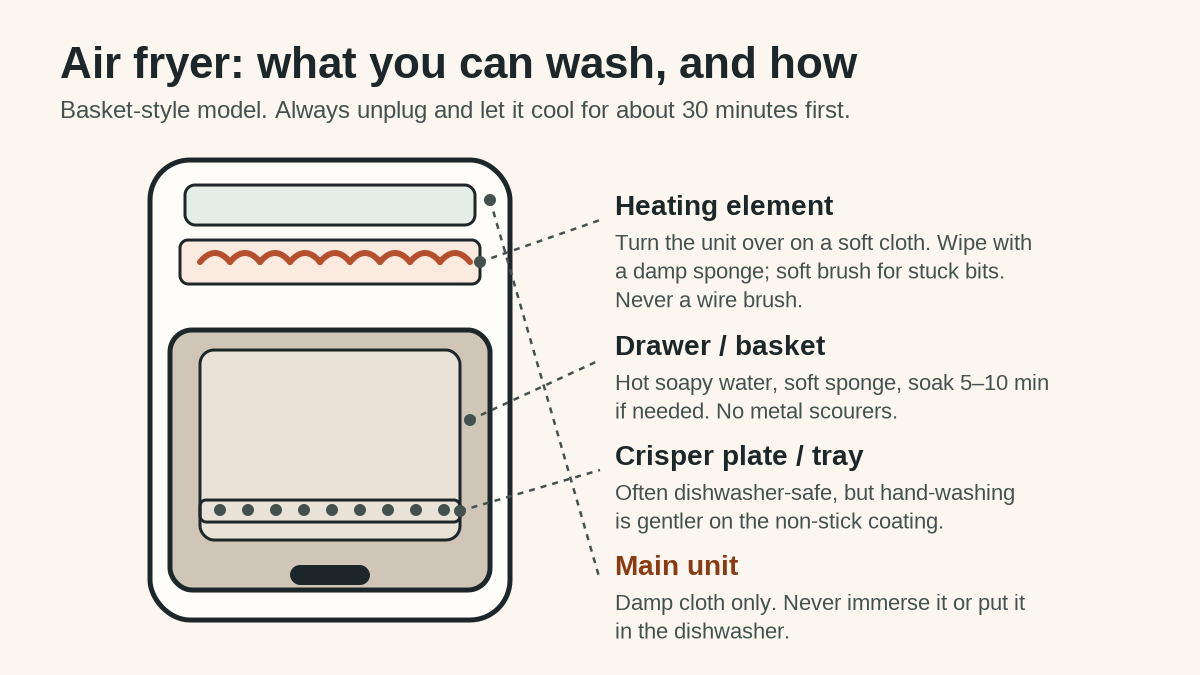
Air fryers are brilliant for quick dinners and miserable to clean if you leave them. Fat collects in the drawer, splashes bake onto the element, and a week of that gives you a smoky kitchen and food that tastes faintly of last Tuesday’s chicken wings. The fix is mostly habit: a five-minute wash after you use it, and a proper clean every few weeks.
This guide works for basket (drawer) air fryers, including dual-basket models, which are the most common type in the UK. Oven-style air fryers with racks follow the same rules, but check your manual for which parts come out.
What you shouldn’t use: steel wool, metal scourers, wire brushes, oven cleaner, or anything gritty. Philips and Ninja both warn against abrasive cleaning materials and metal utensils because they damage the non-stick coating.
Electrical safety. Always switch off at the wall and unplug before cleaning, and let the air fryer cool. The element and the inside stay hot for a while after cooking. Never put the main unit in water or under a running tap, and never put it in the dishwasher. Water in the electrics is a shock and fire risk. Make sure every part is dry before you plug it back in.
Doing this while the drawer is still warm, but not hot, makes grease far easier to shift.
If you can’t face it straight after dinner, at least put hot water and a drop of washing-up liquid into the drawer to soak. Ten minutes in hot water does most of the work.
Do this when you see brown marks on the drawer, smell old fat when it heats up, or see smoke.
Take out the drawer, basket and crisper plate. Fill the sink with hot water and washing-up liquid and let them soak for 10 to 15 minutes. Philips recommends filling the pan with hot water and washing-up liquid to soften residue.
For brown, sticky marks that soaking doesn’t shift, mix two or three tablespoons of bicarbonate of soda with a little water into a thick paste. Spread it over the marks, leave it for 15 minutes, then work it off gently with a soft brush. Rinse very thoroughly.
Bicarb is mildly abrasive, so use a soft brush and gentle pressure, never a scourer. Which? notes that it can scratch some delicate surfaces. Test it on a small area if your basket has a fragile-looking coating.
This is the part most people miss. Splashes of fat on the element are a common cause of smoke and burning smells.
Don’t spray water or cleaner straight at the element, and don’t use a wire brush on it.
Wipe the inside of the cavity with a damp, soapy cloth, then a clean damp one. Wipe the outside, the handle and the control panel. Avoid spraying anything onto the controls.
Dry everything with a tea towel, then leave the parts on the side for a while to air-dry before you put them back.
| Part | How often | What to do |
|---|---|---|
| Drawer and crisper plate | After every use | Pour off fat, then hot soapy wash |
| Inside of the cavity | Weekly, or when splashed | Damp, soapy cloth, then a clean damp cloth |
| Heating element | Monthly, or when it smokes | Unit upside down, damp cloth or soft brush |
| Outside and controls | Weekly | Damp cloth, then dry |
| Air vents at the back | Every few months | Dry soft brush to clear dust; never poke anything inside |
If you cook fatty foods most days, like bacon, sausages or chicken wings, do the deep clean more often. Grease builds up faster, and old fat is what makes air fryers smoke and smell.
| Part | Dishwasher? | Our advice |
|---|---|---|
| Crisper plate / rack | Often yes; check the manual | Hand-wash usually, dishwasher occasionally |
| Drawer / basket | Often yes on newer models | Hand-wash to protect the coating |
| Silicone liners | Usually yes | Fine on the top rack |
| Main unit | Never | Damp cloth only |
Even when parts are dishwasher-safe, strong dishwasher detergent and high heat wear non-stick coatings faster over time. Which?’s air fryer cleaning guide makes the same point.
A peeling or flaking basket isn’t something to clean and carry on with. Philips says that damage to the coating is usually caused by metal utensils, abrasive cleaners or scouring pads, and advises replacing the part. Most manufacturers sell replacement baskets and crisper plates, which costs a lot less than a new air fryer.
To protect the coating:
It smokes when I cook. Usually old fat in the drawer or on the element. Do a deep clean. When cooking fatty foods, pour off the fat halfway through.
It smells of plastic when new. Many manuals suggest running it empty for a few minutes before the first use, in a ventilated room. Follow your model’s instructions.
Food sticks to the basket. The coating may be wearing, or the basket may not have been dry. A light brush of oil on the food, not the basket, helps.
There’s a lingering fishy or garlicky smell. Wash the drawer, then put a little lemon juice in a heatproof dish with water and run the air fryer for a few minutes only if your manual allows cooking liquids in the drawer. Otherwise, wipe the inside with diluted lemon juice and let it air.
Perforated parchment or silicone liners do catch drips. Use ones made for air fryers, only put them in with food on top to hold them down, and never preheat with a loose paper liner inside. It can lift into the element and scorch. For working out cooking times and temperatures from oven instructions, see our oven-to-air-fryer guide and calculator.
Many baskets and crisper plates are labelled dishwasher-safe, including on several Philips and Ninja models, but check your manual. Hand-washing is gentler on non-stick coatings and many manufacturers recommend it to make them last longer.
Soak the basket in hot water with washing-up liquid for 10 to 15 minutes. For tougher marks, make a paste of bicarbonate of soda and a little water, leave it on for 15 minutes, then work it off with a soft brush and rinse well.
Stop using a basket whose non-stick coating is flaking or peeling, and contact the manufacturer about a replacement part. Peeling is often caused by metal utensils, abrasive cleaning or knocks.
Smoke usually comes from grease left in the drawer or splashed onto the element, or from cooking fatty foods. Clean the drawer after each use, and pour away excess fat when cooking things like bacon or sausages.
Parchment liners made for air fryers can reduce cleaning, but they must be weighed down by food and never used during preheating, because loose paper can blow into the element. Follow your manufacturer’s advice.
This guide is general advice for UK homes. Your appliance manual and product labels come first: if they say something different, follow them. Spotted something wrong or out of date? Tell us and we’ll check and correct it.
How to convert oven recipes to an air fryer in °C, including fan ovens and gas marks: the simple rule, a conversion chart, worked examples and a free calculator.
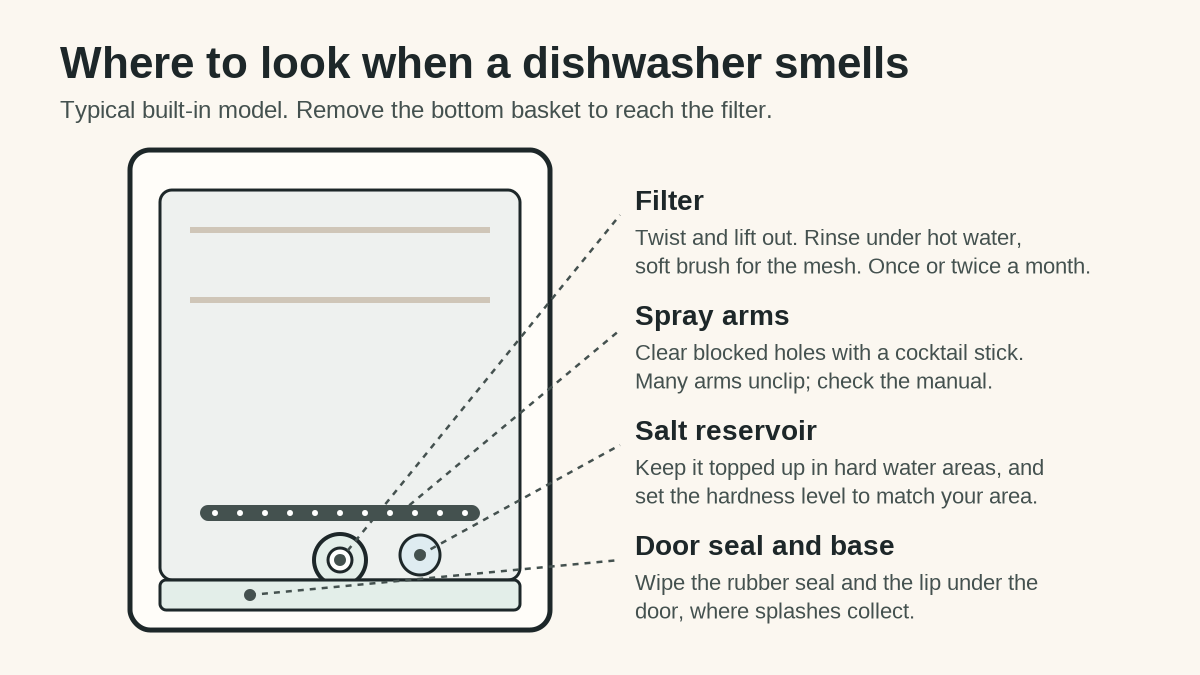
How to clean a dishwasher step by step: the filter, spray arms, door seal and a hot cleaning cycle, plus salt and rinse aid settings for UK hard water and how to fix smells and cloudy glasses.
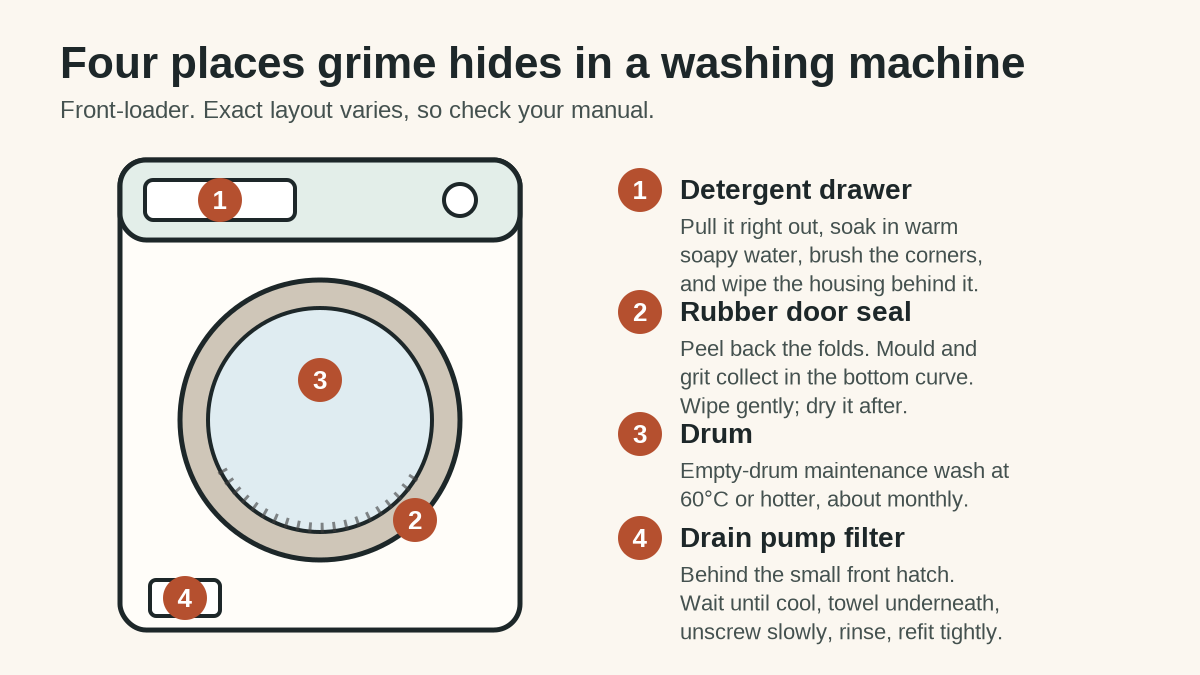
A step-by-step UK guide to cleaning a front-loading washing machine: the detergent drawer, rubber door seal, drum and drain pump filter, plus how to stop the smell coming back.