Appliances
How to clean a washing machine (and stop it smelling)
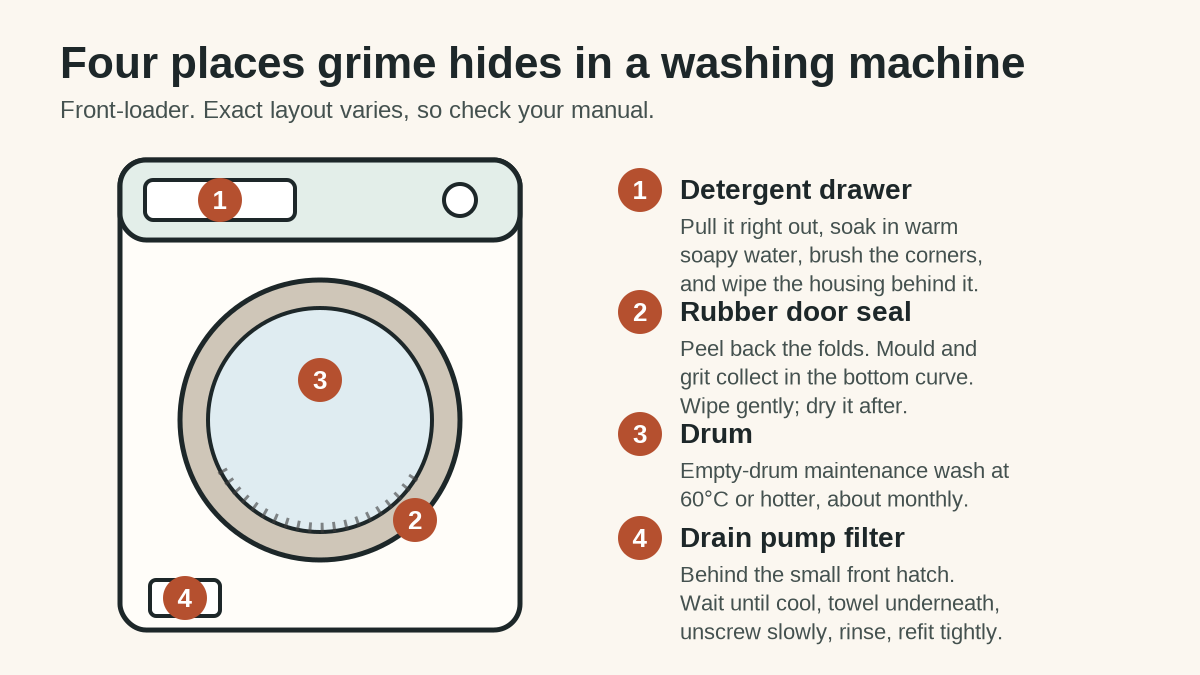
A step-by-step UK guide to cleaning a front-loading washing machine: the detergent drawer, rubber door seal, drum and drain pump filter, plus how to stop the smell coming back.
Appliances
How to clean a dishwasher step by step: the filter, spray arms, door seal and a hot cleaning cycle, plus salt and rinse aid settings for UK hard water and how to fix smells and cloudy glasses.
A dishwasher washes itself every time it runs, so it’s easy to assume it never needs cleaning. But it filters out food, grease and grit, and that has to go somewhere. Usually that’s the filter in the bottom of the machine. When it clogs, you get bits of food stuck to “clean” plates, water left in the bottom and a smell when you open the door.
Most of the fix takes ten minutes, and the main job is one most people have never done: cleaning the filter.
Which? lists four signs that the filter needs attention:
Add cloudy glasses and white marks in hard water areas. That’s usually limescale rather than dirt, and the fix is salt and settings rather than scrubbing.
Safety. Switch the dishwasher off before you put your hands in, and let it cool after a cycle, because the element and water can be very hot. Watch for broken glass in the filter. Never put washing-up liquid in the machine, because it makes floods of foam. Use dishwasher cleaners on their own, never with bleach or other products. Dishwasher tablets and cleaners are harmful if swallowed, so store them high up, out of children’s reach. The NHS poisoning page explains what to do if someone swallows one.
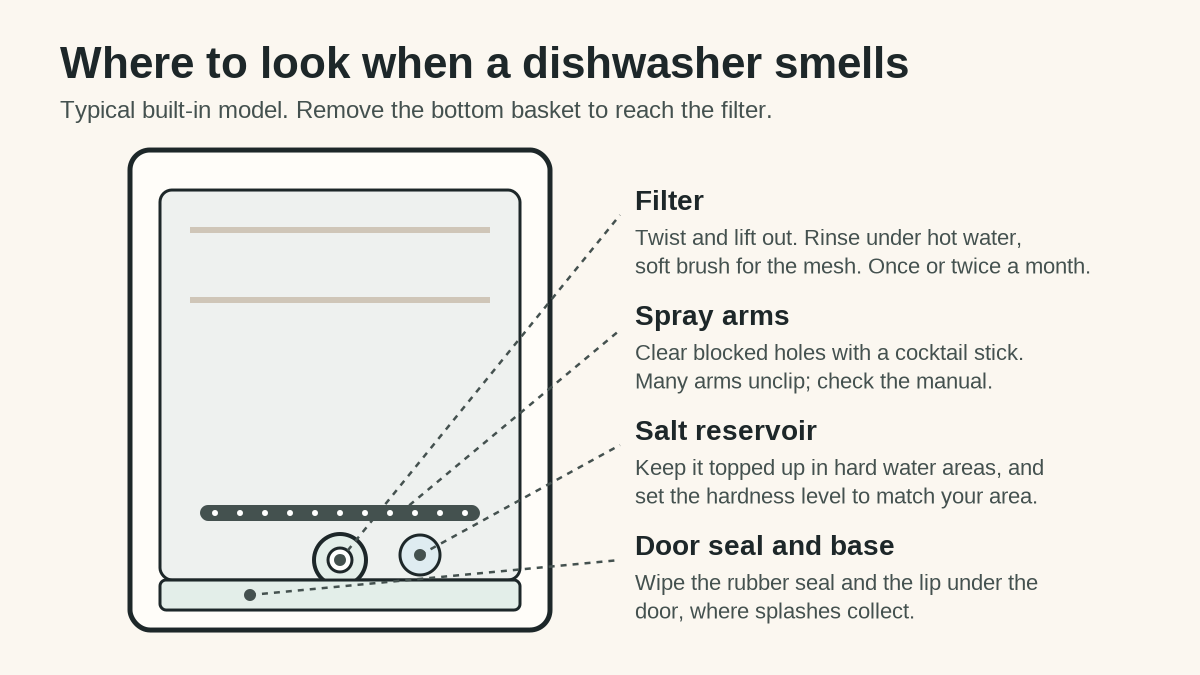
The filter sits in the base of the machine, under the lower spray arm. Most are a cylinder that twists out, sitting in a flat mesh plate.
Which? recommends doing this once or twice a month, or even weekly for the best results. If you’ve never done it, the first time may be grim. It’ll be much quicker after that.
Water sprays through small holes in the arms. When those holes block with food or limescale, parts of the machine don’t get washed.
Food and grease collect in places the spray doesn’t reach.
Wipe them with a damp cloth and a little washing-up liquid, then a clean damp cloth.
With the machine empty, run a dishwasher cleaner on the hottest programme, following the pack instructions. Some go in the cutlery basket upside down. Others go in the detergent compartment. These cleaners are designed to shift grease and limescale from pipes and the parts you can’t reach. Do it every month or two, or more often in hard water areas.
This is the step that fixes cloudy glasses in most of England.
Hard water and dishwashers. Dishwashers use an ion-exchange softener that dishwasher salt regenerates. In hard water areas, which the Drinking Water Inspectorate defines as over 200 mg/l of calcium carbonate, it needs salt to work. Look up your postcode with your water company, such as Thames Water, then set the hardness level on the machine as the manual describes.
Wipe the door and control panel with a soft cloth and a little washing-up liquid in warm water, then dry. For stainless steel doors, wipe in the direction of the grain, and avoid abrasive creams, which leave scratches. Don’t spray cleaner straight onto the controls, because liquid can seep behind the buttons. Some machines have a child lock or “panel lock” you can turn on while you clean.
Black spots on the door seal, or in the corners of the tub, are mould growing where water sits and the machine stays shut. Wipe them with a cloth and a little washing-up liquid, then dry the seal. A dishwasher cleaner on a hot programme helps with the parts you can’t reach. To stop it coming back, leave the door open a little after each cycle, so the inside can dry. Many newer machines open the door automatically at the end of a programme for the same reason. If the seal is split or permanently stained, replacement seals are available for most brands.
| Problem | Likely cause | What to do |
|---|---|---|
| Food on dishes | Dirty filter, blocked spray arms, overloading | Clean filter and arms. Load so the spray reaches everything. |
| Smell | Old food in filter, sump or seal | Clean them, run a hot cleaning cycle, leave the door ajar |
| Water left in the base | Blocked filter, kinked drain hose, blocked sink trap | Clean filter. Check hose and sink waste. |
| White film that wipes off | Limescale | Salt, rinse aid, hardness setting, cleaner cycle |
| Cloudy film that won’t wipe off | Etching (permanent) | Less detergent, lower temperature for glassware |
| Gritty residue | Spray arms blocked, or tablet not dissolving | Clear arms, check the detergent flap opens |
If the dishwasher won’t drain after you’ve cleaned the filter, shows error codes, leaks or trips the electrics, stop using it and contact the manufacturer or a qualified repairer.
Which? recommends once or twice a month, or even weekly for the best results. If you rinse plates heavily before loading, you may get away with less; if you scrape very little, do it more often.
Usually a dirty filter with old food in it, or food trapped in the door seal or sump. Clean the filter and seals, run a hot cleaning cycle, and leave the door slightly open after use so it can dry out.
In soft water areas, all-in-one tablets may be enough. In hard and very hard water areas, many manufacturers recommend using dishwasher salt as well, because the tablets’ built-in softening isn’t enough. Check your manual and set the hardness level.
Some people do, but manufacturers generally recommend a dishwasher cleaner, which is designed for the job. Regular vinegar use may affect rubber seals in some machines. Never use washing-up liquid, which makes masses of foam.
White film that wipes off is usually limescale. Check the salt and rinse aid levels and the hardness setting. A film that won’t wipe off, called etching, is permanent damage from soft water and too much detergent or heat, and can’t be cleaned away.
This guide is general advice for UK homes. Your appliance manual and product labels come first: if they say something different, follow them. Spotted something wrong or out of date? Tell us and we’ll check and correct it.
A step-by-step UK guide to cleaning a front-loading washing machine: the detergent drawer, rubber door seal, drum and drain pump filter, plus how to stop the smell coming back.
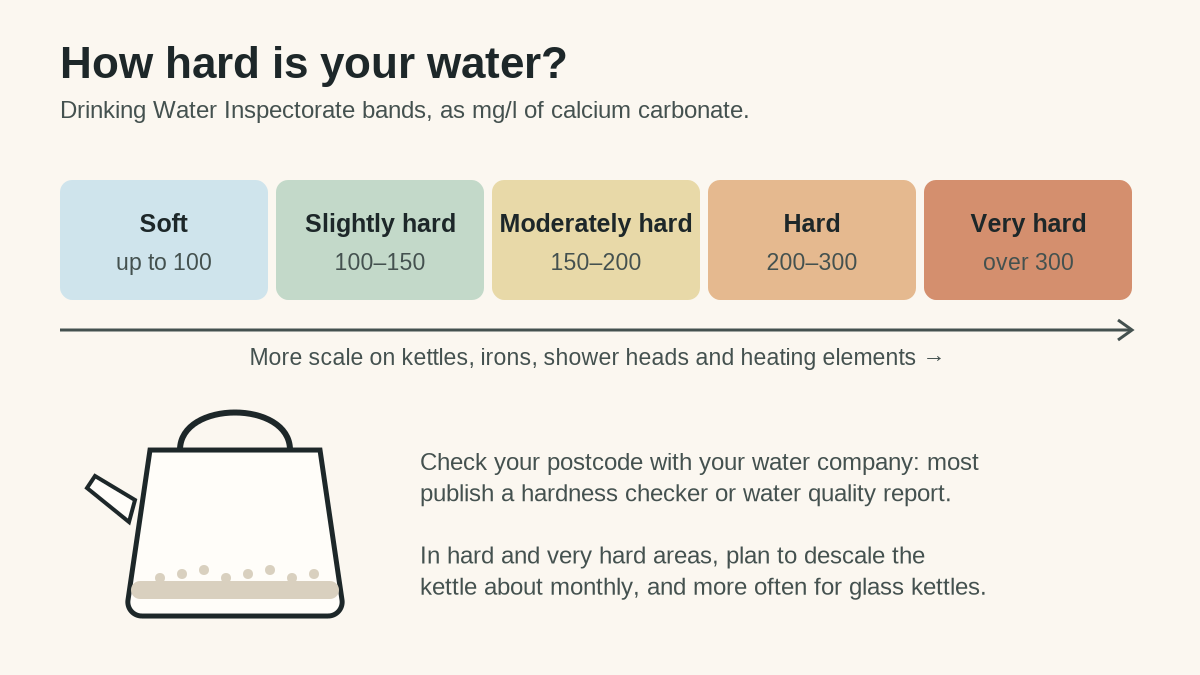
How to remove limescale from a kettle with citric acid, white vinegar, lemon or a shop descaler, how often to do it in UK hard water areas, and how to clean the limescale filter.
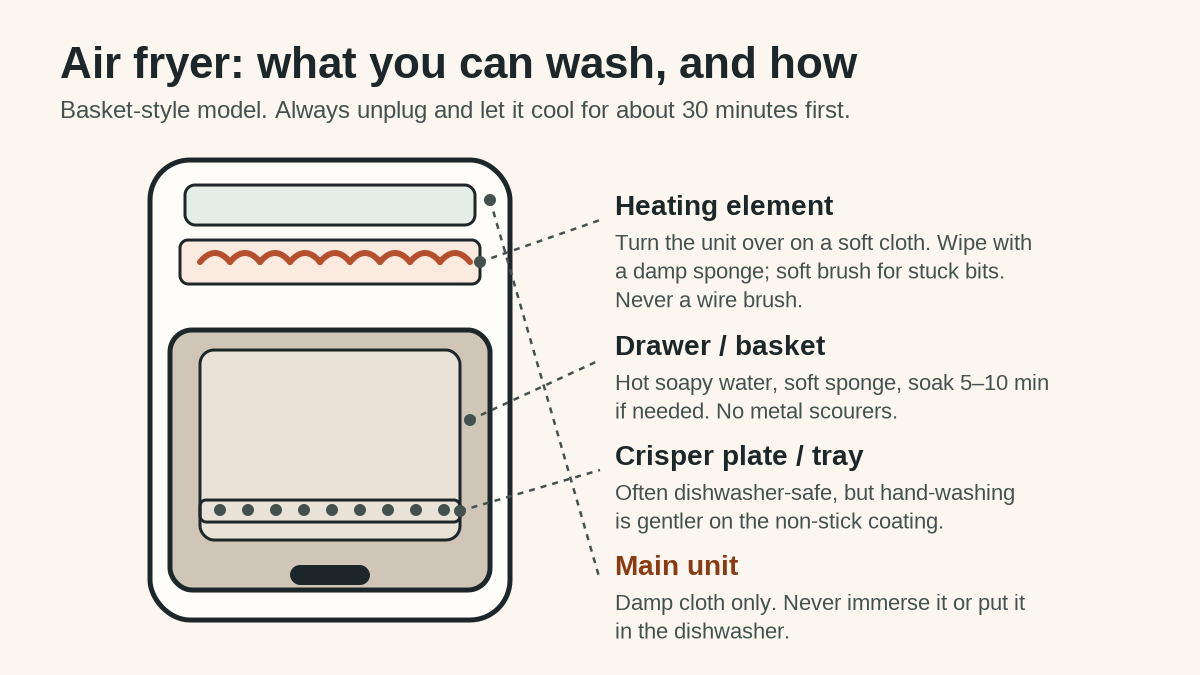
How to clean an air fryer basket, drawer and heating element without damaging the non-stick coating, with a quick after-use routine and a monthly deep clean.